We are deep in the midst of wedding season. Whether you’re attending as a guest, or planning your own, you will probably be taking note of the special moments, and how each couple make their wedding truly their own, and reflective of their relationship. Joanna Newton is a Partner at Stowe Family Law and explains what the proposal in law changes could mean...
Over the past two decades, humanist wedding ceremonies (which is a wedding that is non-religious ceremony) have soared in popularity. The most recent statistics from 2020 are from Humanists UK and reveal that humanist weddings have increased by a huge 266% since 2004.
People choose a humanist ceremony for many different reasons. For most, they find that they can make the wedding more personal, tailored to them as a couple, and representative of their love, both together and with their friends and family.
A humanist wedding can be made up of anything the couple wants and can be in a place that is special to them. It is popular to have a destination wedding, often somewhere warmer and sunnier! And who can blame them? Getting married abroad often comes with some legal quirks, which it is good for couples to be aware of.
If you decide to marry abroad, and the marriage is recognised in that country, it is generally likely that your marriage will be recognised in the UK. For example, if you married in Cyprus, you could have either a civil wedding or a Christian wedding. For it to be legal in Cyprus, you would need to provide the appropriate documentation, including birth certificates, and follow any other legal requirements. If you adhere to these, then your marriage will be legal in England and Wales. However, if you have a humanist wedding abroad, it will not be recognised as a legal marriage in England and Wales.
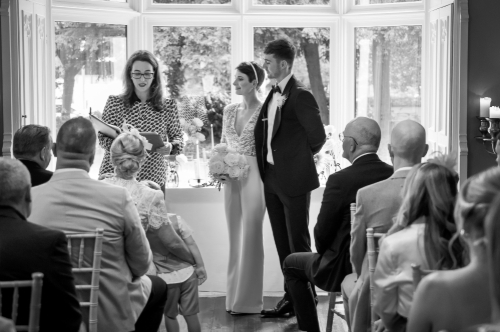
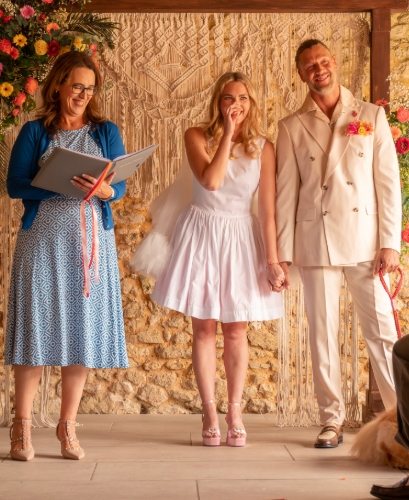
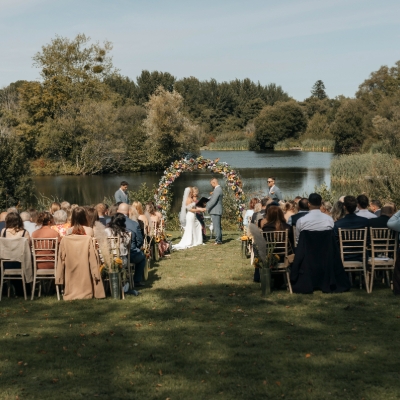
A humanist wedding ceremony is conducted by a celebrant and can take place anywhere. Vows are usually written by each soon-to-be spouse in place of the structure and traditional vows associated with religious weddings. A religious wedding is conducted on a religious site (e.g. a church) by a religious leader such as a vicar. Religious weddings in this country tend to be Christian, as these are the only ceremonies that are legally binding. If you’ve attended a wedding in the last few years, it’s likely you’ve been to a mix of both!
Currently, humanist weddings are not legally binding ceremonies in England and Wales, and couples are not officially married in the eyes of the law. However, in Scotland, The Republic of Ireland, Northern Ireland and the Channel Islands, these ceremonies are binding.
This means that couples who have a humanist wedding who want to be legally married also need to have a civil ceremony conducted. Usually this will mean a registry office wedding to sign the legal paperwork.
In 2022, the Law Commission released a report, recommending reforms that would allow wedding law to maintain pace with a rapidly changing society, and the desires of couples getting married. This included legalising humanist wedding ceremonies, by regulating marriages based on the officiant, rather than the building it is conducted in. Providing the humanist officiant is registered, this would make the marriage legal.
The Government recently said they were looking again at the recommended reforms, and legalisation of humanist weddings was put back on the table. This is potentially very good news for couples hoping to get married in the coming years, but not wanting to plan two separate ceremonies.
It would also prevent confusion, as it is not always known that humanist weddings are not legal ceremonies, so some couples believe they are married but are only cohabitees. Being a cohabitee means you do not have the same rights as married couples, and it can be tricky when it comes to things like inheritance if one of you passes away or your relationship ends. Legalising humanist weddings could reduce the number of these issues.
On the other hand, some couples choose to have a humanist wedding specifically so that their marriage is not legally recognised. Marriage is a legal contract which comes with obligations, particularly relating to finances. By getting legally married, your and your new spouse’s money is interlinked, so if you sadly divorce in the future, the money is a shared pot.
Some people want to avoid this, whilst still celebrating their love in front of their friends and family members. By legalising humanist weddings, the Government may be removing an element of choice. The legal status of cohabitees means that there is no financial responsibility of a couple towards each other, which suits some couples. If a couple wish to, they can put together a ‘cohabitation agreement’. This is not legally binding, but helps to identify finances and assets, and what should happen if one person dies, or the couple break up.
Legalising humanist weddings would reflect our multi-belief society and changing attitudes towards marriage and relationships. It would mean England and Wales were in line with the rest of the UK and give legal recognition to couples based on their love, rather than their beliefs, and afford them the same legal rights as civilly married couples.
However, there may be some aspects that need further consideration, as it removes the freedom of choice. Any reform would need to enable an element of choice, for example having a humanist ceremony performed by an unregistered officiant, which would mean it was not legally binding.
It is important to be aware of the legal standing of your relationship, however, whether humanist, religious, here, or abroad, weddings should be about celebrating love!