From big celebrations to budget savvy: the changing face of UK weddings
At a time of rising costs and changing perspectives, is the sound of wedding bells as tempting as it once was? To find out, Legal & General polled more than 2,000 married and engaged couples to see if they opted for a big wedding – or a big rethink.
Weddings in 2024 A 2024 survey revealed the average cost of a UK wedding has risen to £20,700, marking a 12.5% increase from £18,400 in 2022. Despite this, our survey found that couples typically budget much less, with the average amount set aside being just under £9,000 (£8,997.32). There was also a stark difference in wedding budgets across generations. Younger couples, particularly those aged 16-24, budget an average of £14,937 for their special day, while those over 55 set aside £4,614.
Rising costs and financial constraints A significant number of couples, particularly younger ones, find themselves exceeding their wedding budgets. The research revealed 69% of Gen Z respondents (16-24-year-olds) went over their budget, compared to just 18% of those aged over 55. Financial constraints have led many couples to make significant cutbacks. A majority (52%) reported excluding certain elements from their original plans to save money. The top cutbacks include reducing the guest list (22%), and almost a fifth (19%) of 25-34-year-olds said they've had to cut pre-wedding events like stag and hen parties. 63% of respondents also received financial help from family or friends, with a significant gap between Gen Z (85%) and those over 55 (42%).
Memories to last a lifetime Despite the increasing costs of weddings, the data shows that most people have no regrets. A significant majority (55%) responded "no" when asked if they wished they had spent their wedding budget differently. In contrast, only 23% said they would allocate the money differently, while 15% were unsure.
Paula Llewellyn, Chief Customer and Strategy Officer at Legal and General comments, "Planning a wedding is not just about celebrating love, but also managing the money and budgeting realities that come with it. Our survey highlights how couples across the UK are flexing their plans in response to rising costs, while still creating lasting memories. "Whether it's a grand celebration or a more intimate gathering, careful planning and realistic budgeting can help couples manage costs without compromising on their plans. Beyond the wedding, thoughtful financial planning can ensure that the next steps in life are taken with confidence. Our dedication to providing peace of mind extends beyond the wedding day, helping couples protect their future and navigate life's journey with security and joy."
In summary - from big celebrations to budget savvy: the changing face of UK weddings · Average wedding budget is just under £9,000 · 69% of Gen Z exceed their budget, compared to 18% of those over 55 · A majority (55%) of respondents said they didn't regret having a wedding · 52% of couples cut wedding costs; 19% of 25-34-year-olds reduced pre-wedding events
New app launches to simplify one of marriage’s biggest admin headaches
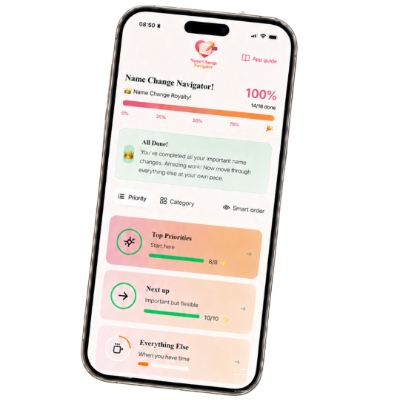
Changing your name after marriage can mean updating details with countless organisations, from banks and subscriptions to official documents and employers. New app Name Change Navigator aims to make the process easier, guiding newlyweds through each step from one platform. Founded by Rebecca Dainton, Head of Product at Flutter UK & Ireland, the app was created to reduce the stress and mental load associated with name changes. It supports a range of naming journeys, including traditional surname changes, double-barrelling, blended surnames and other choices following marriage, civil partnership, divorce or personal identity changes. The launch comes as younger generations increasingly rethink traditional naming conventions, with technology offering a more streamlined approach to this often-overlooked part of newlywed life.
READ ARTICLE
From best mates to distant relatives: Brits reveal the wedding gift hierarchy
How much should you spend on a wedding gift? It seems the answer depends on just how well you know the happy couple. New research from One4all Gift Cards has revealed that almost half of Brits (49%) would spend less on a wedding gift if they were not particularly close to the couple. The relationship came out ahead of travel and accommodation costs (38%) and paying for a hen or stag do (28%) when it comes to factors influencing how much guests are prepared to spend. For those closest to them, Brits consider an average of £77 per person to be an acceptable wedding gift. The most popular amount was between £50 and £100, selected by 43% of respondents, while 36% believe spending up to £50 is perfectly acceptable. Just 5% would spend more than £200.
READ ARTICLE
Revealed: England and Wales’ most common wedding anniversary date as August accounts for nearly one in six
1 September is the most common wedding anniversary date, with an average of 1,557 marriages taking place on the date, new analysis has revealed. The research, from drinks and gifting retailer Bottled and Boxed, analysed 22 years of marriage registration data from the Office for National Statistics to identify the dates when couples across England and Wales are most likely to be celebrating their wedding anniversaries each year. Every date in the top 10 falls between late July and early September, showing how heavily the most common anniversaries are concentrated in late summer. August is the most common month for wedding anniversaries, accounting for 15.7% of all marriages analysed, with an average of 1,254 couples married per day.
READ ARTICLE
Marriage law reform: what the Government’s proposals could mean for couples
Planning a wedding is fun, stressful, time consuming. Couples want a ceremony that reflects their taste, is reflective of their love for each other and feels unique. The current restrictions in place can sometimes fetter that. Long-awaited plans to modernise weddings law in England and Wales could give couples far greater freedom over where and how they marry. It is hoped that they may be part of a much wider transformation of family law which is going through the biggest shakeup in decades.